

The 2026 Queer Liberation March moved through Manhattan with a clear message: Pride remains tied to protest, organizing and public resistance.
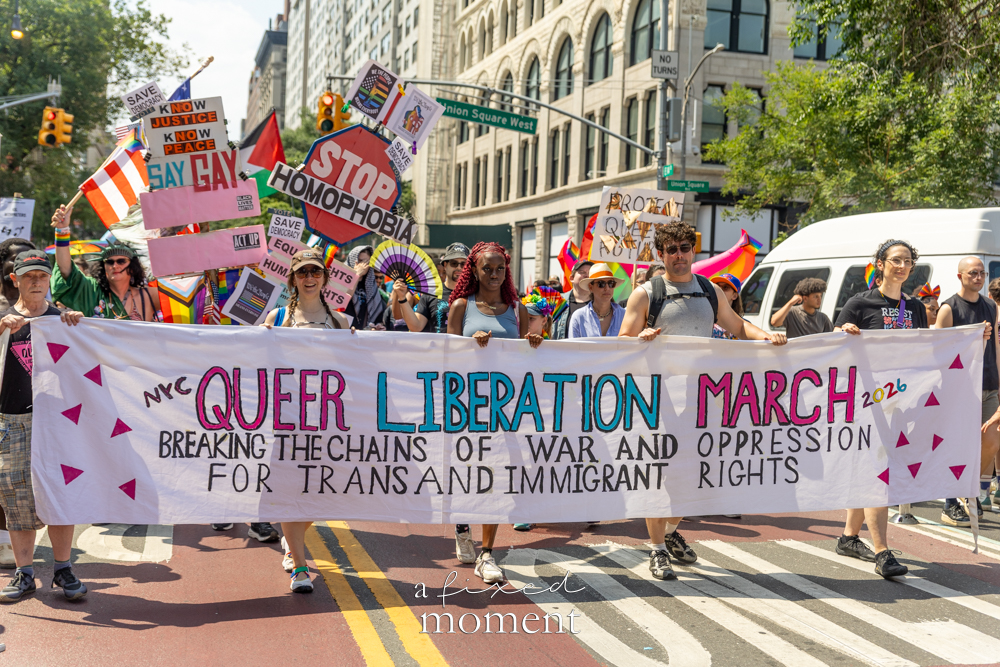
Organized by the Reclaim Pride Coalition, the 8th Annual Queer Liberation March carried the theme Breaking The Chains of War and Oppression for Trans and Immigrant Lives. The march began at Union Square West before heading down Broadway, bringing together activists, community groups, artists, organizers and New Yorkers who used the street as both a route and a platform.
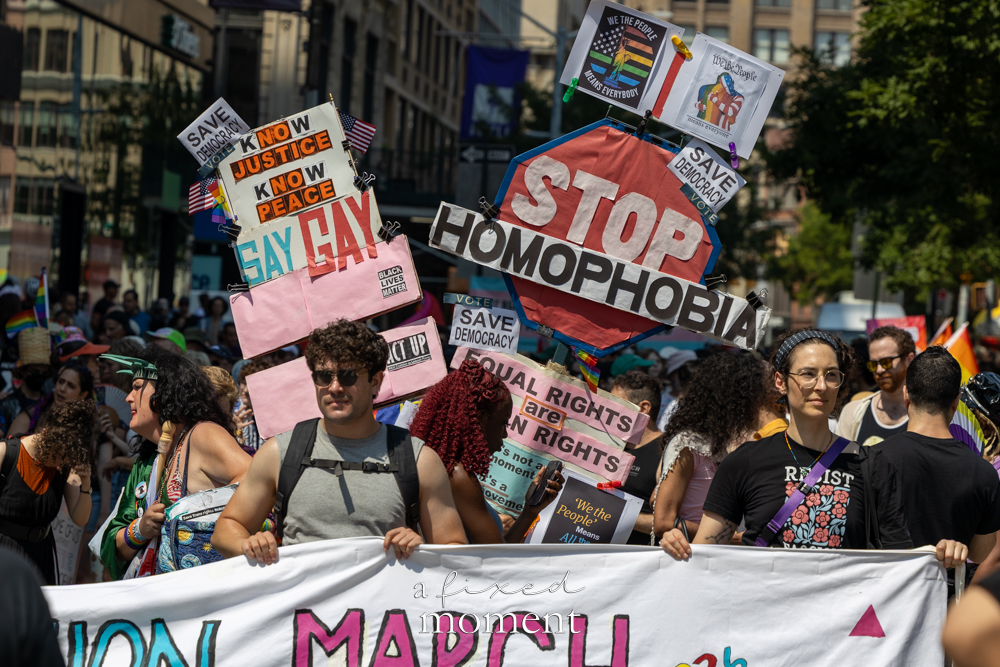
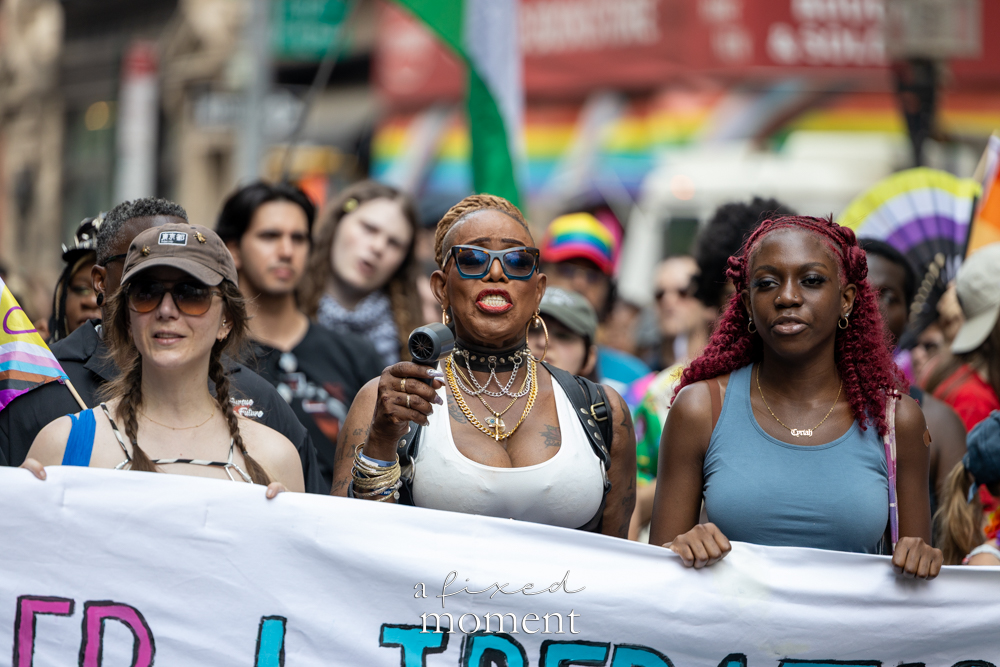
At the front of the march, a large banner read, “NYC Queer Liberation March 2026 / Breaking the Chains of War and Oppression / For Trans and Immigrant Rights.” Around it, handmade signs pushed the message further: “Stop Homophobia,” “Know Justice Know Peace Say Gay,” “Save Democracy,” “Equal Rights Are Human Rights,” “Fund Communities Not Wars,” “ICE Out of New York,” “Fuera ICE,” “No One Is Illegal,” “Housing Is A Human Right,” and “Hands Off Trans Healthcare.”
The march’s visual language was direct and crowded: signs held high, flags moving above the street, megaphones cutting through the noise, and participants dressed in protest gear, Pride colors, costumes and handmade looks. It did not separate celebration from politics. Instead, the march connected queer liberation to immigrant rights, trans healthcare, anti-war organizing, Palestinian solidarity, housing justice, HIV funding, prison justice and democracy.
The strongest message on the street was that Pride was not being treated as a brand moment. It was being treated as a public demand.
That approach reflects the mission of the Reclaim Pride Coalition, which has organized the Queer Liberation March in New York City since 2019. The coalition frames the march as a grassroots alternative to corporate Pride, rejecting corporate sponsorship and police involvement while centering LGBTQIA2S+ communities that are often pushed to the margins.
Community Power, Housing Justice and HIV Funding
Housing Works had one of the strongest visible contingents in the march, carrying a large “Community. Power. Liberation.” banner. Around the banner, signs called for protecting queer youth, saving HIV funding, closing Rikers, keeping ICE out of New York, defending trans healthcare and treating housing as a human right.
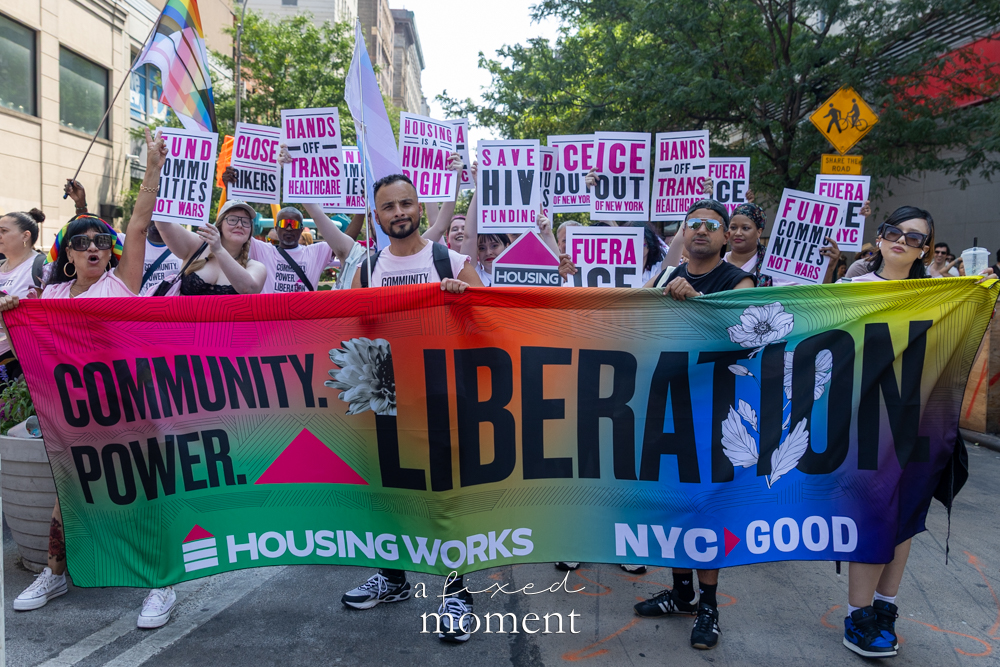
The Housing Works contingent showed how much of the march lived at the intersection of public health, housing, immigration, policing and LGBTQIA2S+ rights. The message was not limited to one issue. It was built around the idea that queer and trans safety depends on material conditions: healthcare, housing, legal protection, funding and freedom from state violence.
Megaphones, Movement and Direct Action
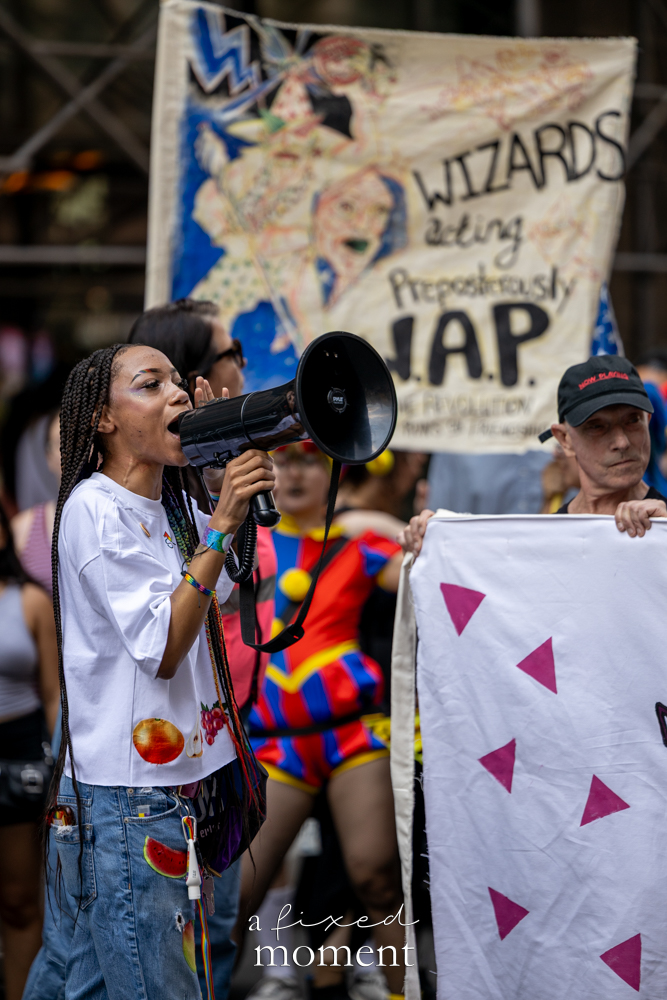
Several moments in the march centered on direct speech. Marchers used megaphones to lead chants, organize the crowd and keep the energy moving down the street. In one frame, @jaywwalker held a “Gays Against Guns” megaphone while wearing a black Queer Liberation March shirt, a red “RESIST” cap and protest buttons.
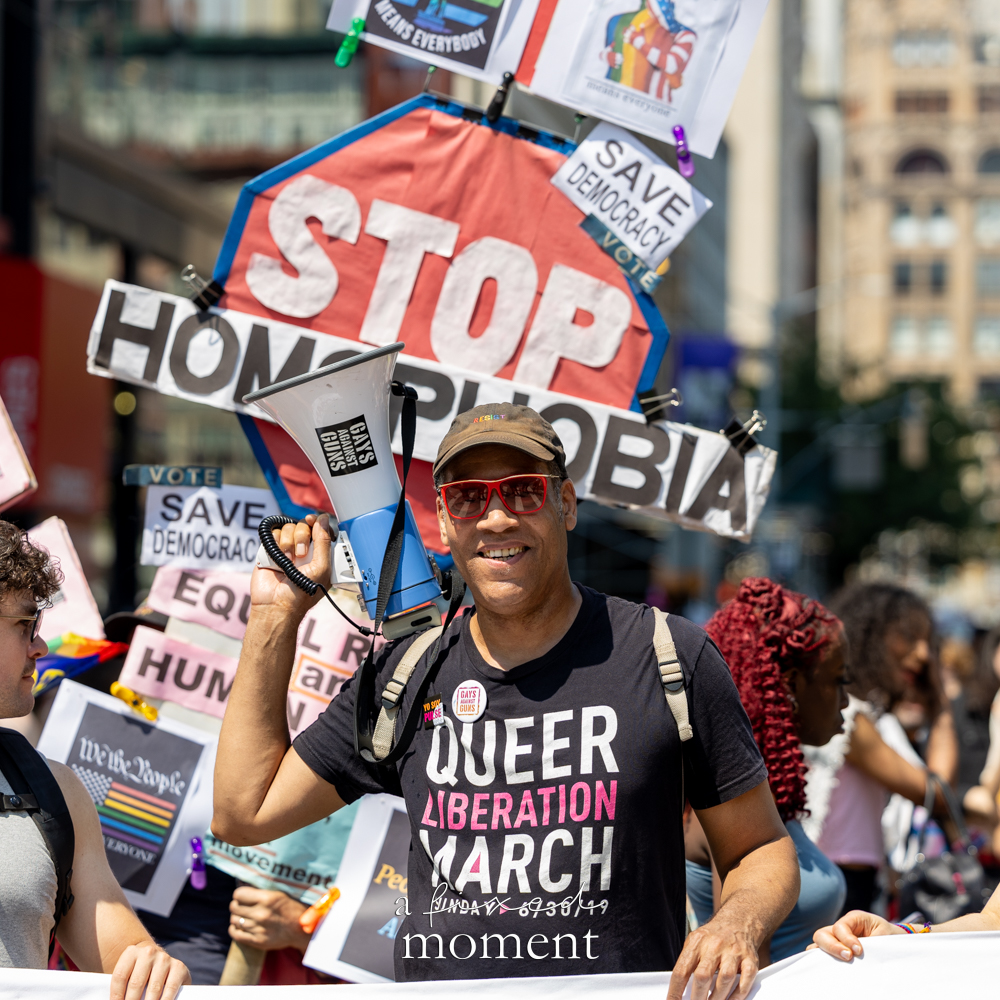
Gays Against Guns added another issue to the march’s larger frame: the fight against gun violence and the demand for safety in LGBTQIA2S+ communities. Like many groups visible in the march, the message was specific but connected to a broader call for liberation.
Expression, Costume and Street-Level Energy
The march also carried humor, style and theatrical expression. Participants moved through the city in protest shirts, neon colors, Pride gear, costumes, face paint, flags and handmade accessories. That mix gave the march a street-level character that was both confrontational and personal.
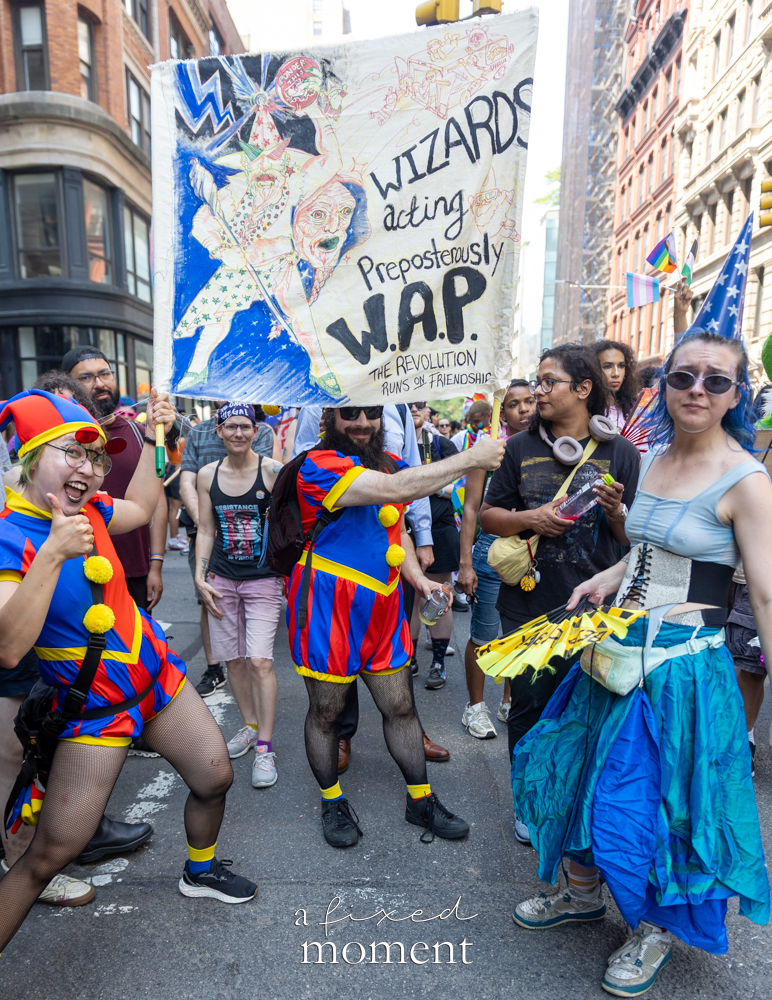
Another banner read “Wizards Acting Preposterously” and “The Revolution Runs on Friendship,” adding a playful note to a march built around serious political demands. That balance was part of the day’s texture: grief, anger, style, humor, solidarity and defiance all sharing the same street.
A Grassroots Pride in the Street
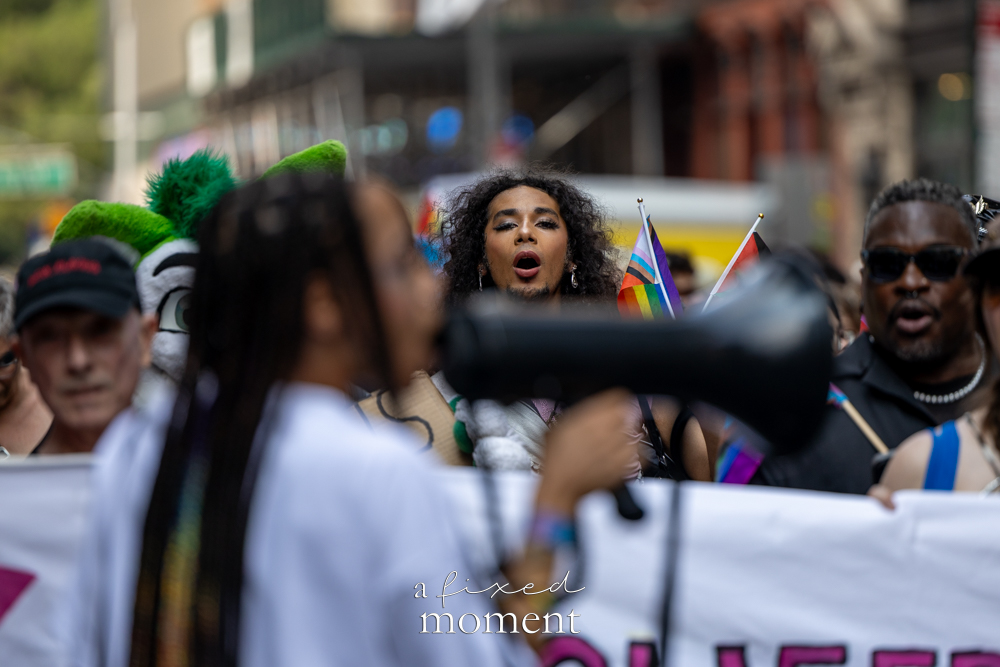
As the march passed through downtown Manhattan, the crowd filled the corridor with chants, flags and signs. The visual center kept shifting: a Statue of Liberty flag, Pride flags above the crowd, megaphones in the foreground and banners moving through the street.
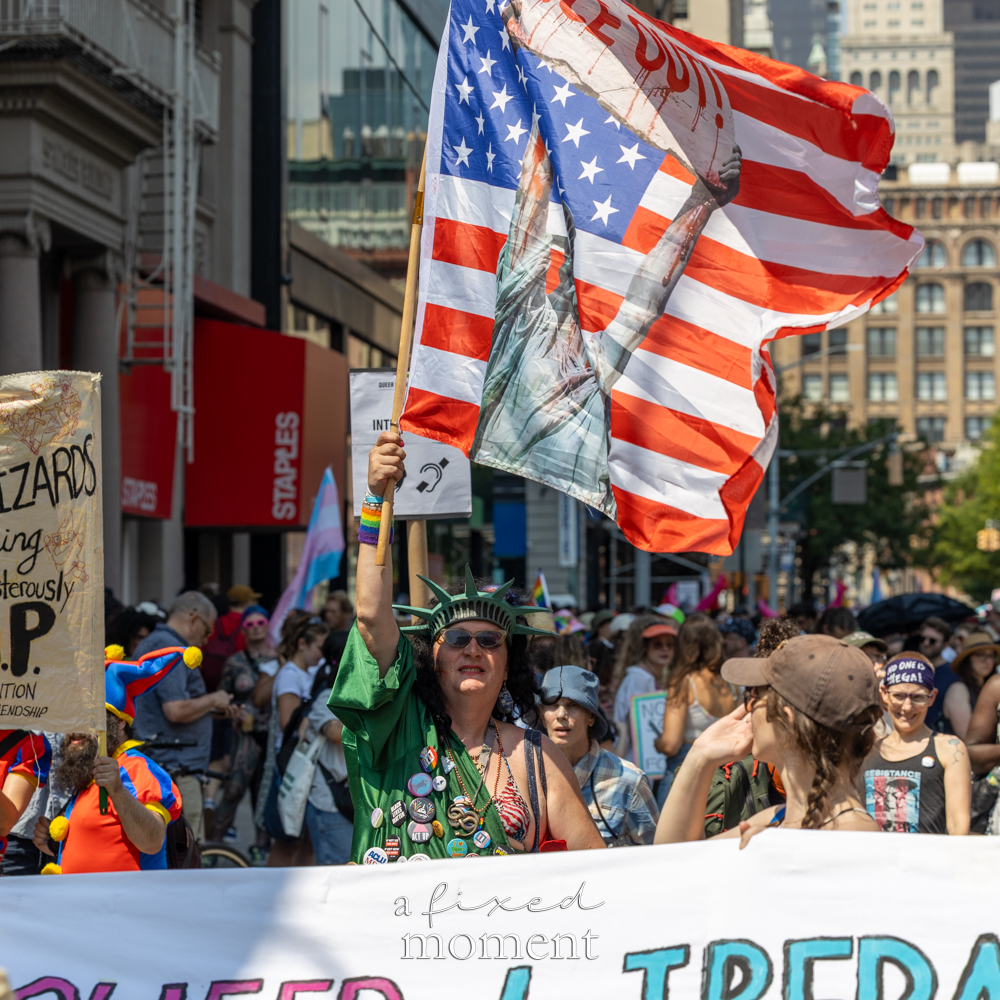
The 2026 Queer Liberation March was not framed around spectacle alone. Its strongest moments came from the density of its demands and the way those demands overlapped. Trans rights were tied to immigrant rights. Immigrant rights were tied to anti-ICE organizing. Housing was tied to healthcare. HIV funding was tied to survival. Queer liberation was tied to everyone pushed into danger by policy, policing, war, poverty and discrimination.
That is what gave the march its force. It was not a parade moving past the city. It was a protest moving through it.
More Photos from the 2026 Queer Liberation March
See More A Fixed Moment Coverage
A Fixed Moment documents protests, parades, concerts, conventions, sports, nightlife and public culture across New York City and beyond.
View more photo coverage on Patreon. Patreon is free to join, with more event galleries and updates posted there.

